What Is Outbound Sales? A Plain-English Guide
What outbound sales is, how it differs from inbound, and the five steps every outbound process follows, from list to reply.
Outbound sales means you start the conversation. Instead of waiting for a prospect to find your website, you pick the companies you want to work with and contact them first, by email, LinkedIn, phone or another channel.
It is the fastest way for a small team to get in front of buyers, and the easiest to do badly. This guide covers what outbound is, when it makes sense and the five steps every good outbound process follows.
Outbound vs inbound in one sentence
Inbound waits for the buyer to raise a hand. Outbound picks the buyer and raises the hand for them. Most teams end up doing both, but outbound is the one you control this week. We compare them in detail in Inbound vs Outbound.
When outbound makes sense
Outbound works best when:
- You can name your buyers. If you can describe the kind of company that needs you, you can find them.
- Each customer is worth real money. Research and personal messages take time, so the deal has to justify it.
- The market does not know you yet. New products rarely get searched for. Someone has to go and tell people.
If your product costs a few dollars a month and anyone could use it, outbound is usually too expensive per customer.
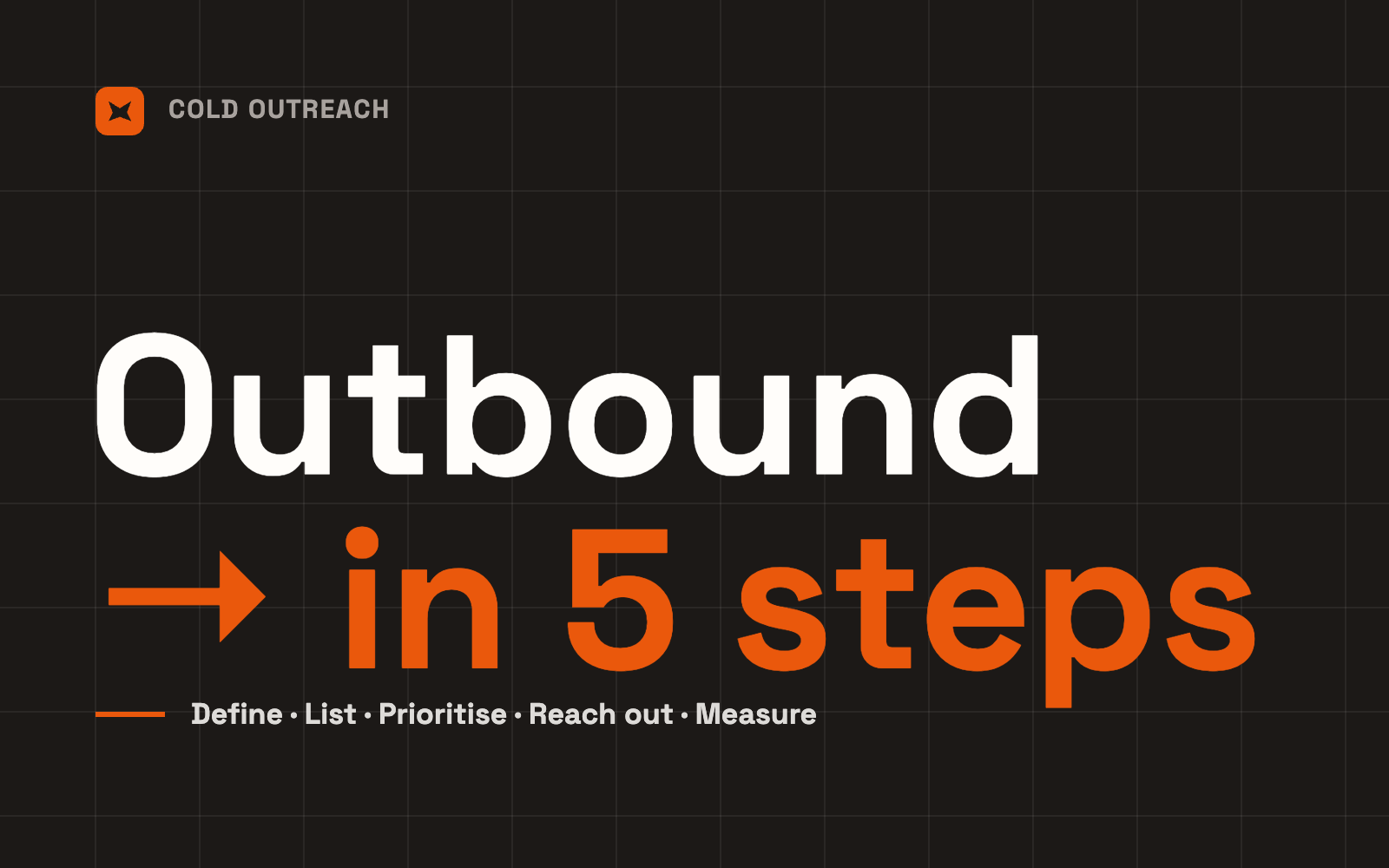
The five steps of outbound
1. Define who you are selling to
Write down your ideal customer profileIdeal customer profile (ICP)A description of the type of company that gets the most value from your product and is most likely to buy.: the industry, size, location and situation of companies that get the most value from you. Everything after this depends on it. See What Is an ICP? for a template.
2. Build a list
Find companies that match. Directories, marketplaces, trade-show exhibitor lists and your own customers' competitors are good starting points. Then add what you need to act: website, size, the right person and how to reach them. That last part is called enrichmentEnrichmentAdding missing data to a lead, such as industry, size, contacts or channels, from public sources..
3. Decide who comes first
You will never contact everyone at once. Lead scoringLead scoringRanking leads by how well they fit your ICP and how likely they are to respond. ranks the list so the best fits get your attention first.
4. Reach out
Write a short, specific first message and plan the follow-ups. This plan is your cadenceCadenceThe schedule of touches you send a lead over time, across one or more channels.. Pick the channel where each person is most likely to answer, not the one that is easiest for you.
5. Measure and adjust
Track reply rateReply rateReplies divided by people contacted. The most honest early metric for outbound., positive replies and meetings booked. When numbers are low, change the list before you change the copy. Most outbound problems are targeting problems.
Who does the work
In a founder-led company, the founder does all five steps. As the team grows, an SDRSDRSales development representative: the person who researches leads and books first meetings. usually takes over research and first contact, and hands qualified conversations to whoever closes.
Either way, the split of time is similar: most of it goes into steps one to three. Writing the message is the short part.
Common mistakes
- Buying a huge list and blasting it. Low replies, high bounces and a damaged sender reputationSender reputationHow much inbox providers trust your domain, based on bounces, complaints and engagement..
- Talking about yourself. The first line should be about them.
- Giving up after one message. Most replies come from follow-ups.
- Ignoring opt-outs. Keep a suppression listSuppression listContacts who must never be contacted again, such as people who opted out or bounced. and honor it everywhere.